Budgeting a Real Alaska Move
Create a cost framework that separates fixed items such as documentation, packing supplies, and core insurance from variable items such as line‑haul, marine segments, terminal handling, and last‑mile trucking.
Use cubic feet to estimate volume and drive container or lift‑van selection. Volume affects labor time, materials, and whether consolidation is appropriate on marine legs.
Protect timing by building slack around interline transfers. Ferries and barges are schedule‑driven, so resilient plans allow rebooking without breaking downstream dates.
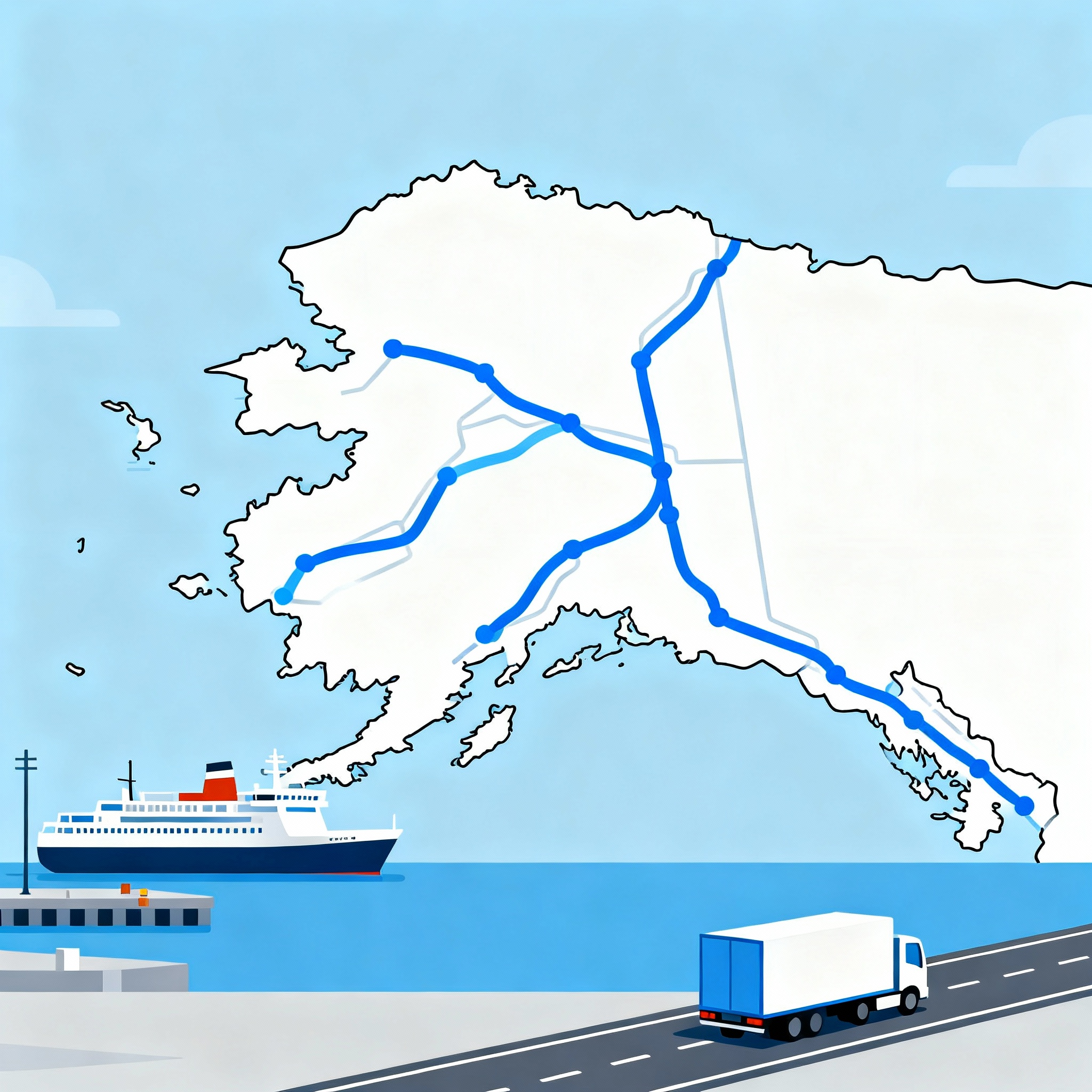
Compare route patterns: highway‑only where roads serve both endpoints; highway plus barge to coastal hubs; highway plus ferry for Southeast; and barge plus local trucking for islands.
Choose service levels deliberately. Full‑service packing reduces risk and stress. Partial or DIY reduces spend, but demands stronger labeling, durable packing, and photo documentation.
Build conservative, expected, and stretch scenarios, then map quotes against each. Request binding‑not‑to‑exceed options to improve predictability where possible.
Vehicles require accurate dimensions, tie‑down points, and fluid checks before marine segments. Vehicle length and height influence lanes and price tiers.
Plan cash flow for deposits and terminal releases. Keep receipts and timestamped photos to streamline claims and reimbursements.
Set valuation coverage, add riders for high‑value goods, and compare carrier vs third‑party policies. Photograph fragile items and electronics thoroughly.
Maintain a single source of truth for quotes, contacts, references, and schedule updates to keep all stakeholders synchronized.
For tailored planning, contact “Independence Moving and Storage”.